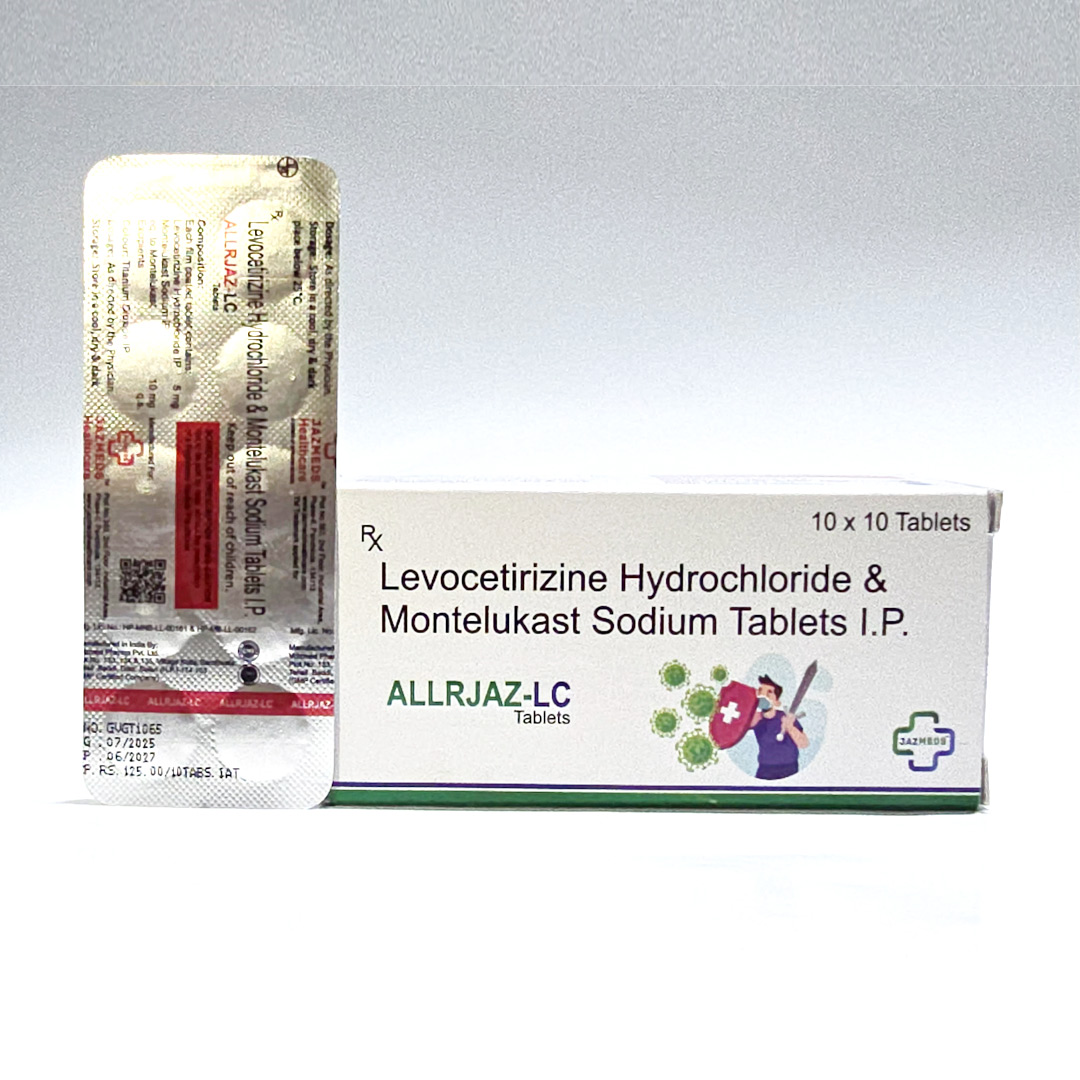
ALLRJAZ LC combines a non-sedating antihistamine (levocetirizine) with a leukotriene receptor antagonist (montelukast). Together they provide complementary relief from allergic rhinitis symptoms (sneezing, rhinorrhea, nasal itching, and nasal congestion) and may help control wheeze or bronchial hyper-responsiveness associated with allergic disease when prescribed by a physician.
ALLRJAZ LC is intended for use when combined antihistamine and leukotriene-modifying therapy is appropriate — for example symptomatic control of allergic rhinitis (seasonal or perennial) and as adjunctive therapy in patients with allergic airway disease where montelukast has been indicated. Use only as directed by a healthcare professional.
Levocetirizine is a selective H1-receptor antagonist that reduces the effects of histamine (sneezing, itching, runny nose). Montelukast is a leukotriene D4 receptor antagonist that blocks cysteinyl leukotriene activity (reducing bronchoconstriction, oedema and mucus production). The combination targets separate inflammatory pathways to improve overall symptom control.
Adults and adolescents (15 years and older): one tablet containing levocetirizine 5 mg and montelukast 10 mg once daily. Levocetirizine is commonly administered once daily, often in the evening; montelukast 10 mg is usually taken once daily in the evening for asthma and allergic rhinitis—follow your prescriber’s instructions. Do not exceed the recommended dose and consult a physician for paediatric dosing, elderly dosing or in patients with hepatic/renal impairment. Mayo Clinic+1
Levocetirizine is generally well tolerated; somnolence, dry mouth or headache can occur in some patients. Montelukast is usually well tolerated but has been associated with neuropsychiatric reactions (including agitation, sleep disturbance, vivid dreams, depression and, rarely, suicidal thoughts) — patients and caregivers should watch for changes in mood or behaviour and report them promptly. For montelukast the prescriber should weigh benefits against these risks, especially in children or patients with a history of psychiatric illness. Mayo Clinic+1
Do not use ALLRJAZ LC in patients with known hypersensitivity to levocetirizine, montelukast, or any excipient. Use caution when treating patients with a history of severe neuropsychiatric disorders; monitor closely for new or worsening behavioural or mood changes during montelukast therapy. Adjust dosing or choose alternatives for patients with significant liver disease per clinician judgement.
No clinically important interactions are known between levocetirizine and montelukast when used together, but always review the patient’s full medication list. Montelukast can interact with strong CYP inducers (for example rifampin) which may reduce montelukast levels; levocetirizine has low potential for CYP-mediated interactions. Advise patients to tell their prescriber about all medicines and supplements they are taking. Drugs.com+1
Monitor for neuropsychiatric symptoms after starting montelukast and advise caregivers to report mood changes, agitation, hallucinations, sleep problems or suicidal thoughts immediately. If such symptoms develop, reassess the need for continued montelukast therapy. For persistent or severe allergic or respiratory symptoms, seek medical review as further investigation or alternative therapies may be required. U.S. Food and Drug Administration+1
Data are limited; use only if clearly needed and when the expected benefit justifies the potential risk to the fetus or infant. Prescribers should consult up-to-date references when treating pregnant or breastfeeding patients.
Store in a cool, dry place away from direct sunlight. Keep out of reach of children. Discard after expiry date printed on the package.
Seek medical attention for severe allergic reactions (difficulty breathing, swelling of face or throat), for new or severe neuropsychiatric symptoms while taking montelukast, or if symptoms of allergic rhinitis or asthma worsen or do not improve with therapy.
© 2024-25, JAZMEDS Healthcare, All rights reserved