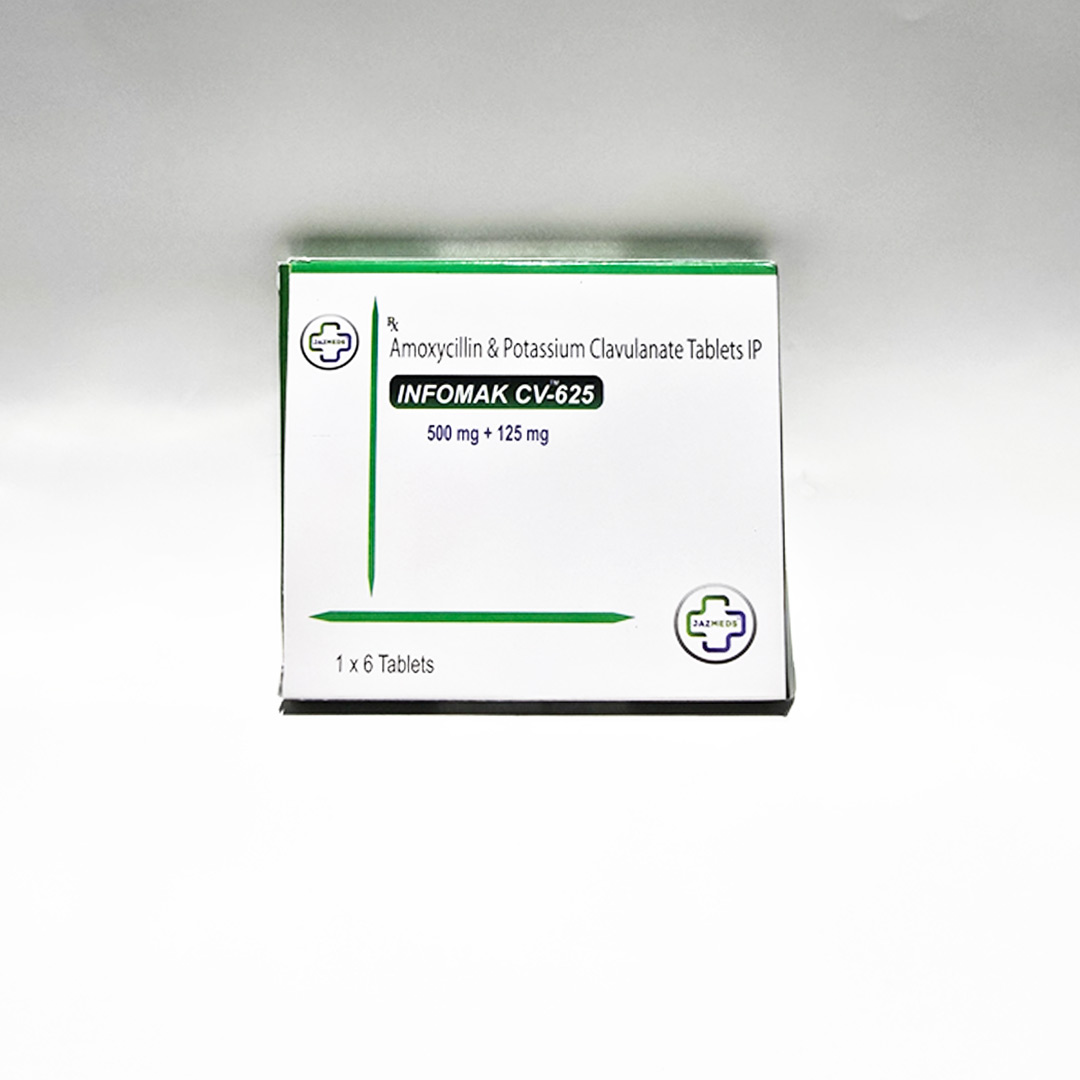
INFOMAK CV 625 is a combination antibiotic containing Amoxicillin 500 mg and Clavulanic Acid 125 mg. Amoxicillin is a well-established penicillin-class antibiotic that inhibits bacterial cell-wall synthesis. Clavulanic acid is a β-lactamase inhibitor that protects amoxicillin from destruction by β-lactamase enzymes produced by many resistant bacteria, restoring and extending amoxicillin’s effectiveness. Together they provide powerful, broad-spectrum antibacterial coverage for a variety of community and some hospital infections when used as directed by a physician.
Acute bacterial sinusitis and otitis media
Lower and upper respiratory tract infections (bronchitis, community-acquired pneumonia)
Skin and soft tissue infections
Urinary tract infections (uncomplicated)
Bite wounds and certain dental infections
Other infections where the causative bacteria are susceptible and a β-lactam/β-lactamase inhibitor is indicated
Broad spectrum of activity against common pathogens
Effective against many β-lactamase producing strains due to clavulanic acid protection
Familiar, widely used antibiotic backbone (amoxicillin) with improved resistance profile
Suitable for many common outpatient infections — shorter effective therapy when used appropriately
Amoxicillin inhibits bacterial cell wall synthesis by binding to penicillin-binding proteins, causing cell lysis.
Clavulanic acid irreversibly inhibits β-lactamase enzymes produced by resistant bacteria, preventing destruction of amoxicillin and enabling it to kill those bacteria.
Prescription only. Follow your doctor’s dosing instructions. Typical adult dosing for INFOMAK CV 625 (tablet) is usually one tablet every 8–12 hours depending on infection severity and prescriber guidance.
Complete the full prescribed course even if you feel better earlier to avoid relapse and resistance.
Take with food to improve absorption and reduce stomach upset.
If you miss a dose, take it as soon as you remember; do not double the next dose.
Note: Pediatric dosing, dosing for severe infections or renal impairment must be prescribed by a clinician — do not self-dose.
Gastrointestinal: nausea, vomiting, diarrhea, abdominal discomfort. (Diarrhea is common — if severe or persistent, contact your doctor.)
Hypersensitivity reactions: rash, urticaria. Serious allergic reactions (anaphylaxis) are rare but possible in penicillin-sensitive patients.
Other: headache, dizziness, yeast infections (oral/vaginal) with prolonged use.
Allergy: Do not take if you have a history of penicillin allergy or severe hypersensitivity to β-lactams. Seek immediate care for breathing difficulty, swelling or severe rash.
Clostridioides difficile infection: Prolonged antibiotic use may lead to C. difficile colitis — report severe diarrhea, abdominal pain or fever to your doctor.
Liver effects: Rare cases of hepatic dysfunction and cholestatic jaundice have been reported; stop medicine and consult doctor if you notice yellowing of skin/eyes, dark urine, severe fatigue.
Renal impairment: Dose adjustments may be required in severe kidney disease.
Inform your doctor about all medicines you take — especially oral contraceptives (antibiotics can reduce efficacy), anticoagulants (monitor INR), allopurinol (higher incidence of rash), and certain other drugs.
Caution when co-administering with bacteria-targeting bacteriostatic antibiotics (may reduce efficacy).
Use with care in patients with history of severe allergy to penicillins or cephalosporins.
Known hypersensitivity to amoxicillin, clavulanic acid, other penicillins or β-lactams.
History of cholestatic jaundice or hepatic dysfunction associated with prior use of amoxicillin-clavulanate.
Store in a cool, dry place below 25–30°C. Protect from moisture and direct sunlight. Keep out of reach of children.
No improvement within 48–72 hours for many infections (or sooner for severe infections).
Severe or persistent diarrhea, abdominal pain, jaundice, allergic reaction, breathing difficulty, high fever, or other worrying symptoms.
Q: Is INFOMAK CV 625 safe for children?
A: Pediatric dosing differs and depends on weight/age — do not give adult tablets to children. Consult a paediatrician for correct formulation and dose.
Q: Can I stop the medicine when I feel better?
A: No — always complete the full prescribed course to prevent relapse and resistance.
Q: Does it affect oral contraceptives?
A: Antibiotics may reduce the effectiveness of oral contraceptives in rare cases — use additional contraception while on therapy and for a short time after; consult your doctor.
Q: What should I do if I get diarrhea?
A: Mild diarrhea is common; maintain hydration. If diarrhea is severe, bloody, or persistent, contact your doctor — it may signal C. difficile infection.
Q: Can I take it with food?
A: Yes — taking INFOMAK CV 625 with food reduces stomach upset and is generally recommended.
© 2024-25, JAZMEDS Healthcare, All rights reserved